Designing Metal Buildings for Future Growth
When businesses plan a new facility, most of the focus is understandably on today's needs: square footage, layout, budget, and timeline.
One of the most common challenges we see years later is not how the building performs on day one. It is how well it adapts as the business grows.
Operations change. Teams expand. Equipment is added. Storage needs increase. A building that cannot evolve often becomes a limitation instead of an asset.
That is where pre‑engineered metal buildings (PEMBs) stand apart. When designed thoughtfully, they offer long‑term flexibility that traditional construction methods often struggle to match.
The Cost of Buildings That Can't Adapt
Many conventional buildings are designed as fixed solutions. Walls, columns, and structural systems are optimized for a single use at a single moment in time.
When expansion or reconfiguration becomes necessary, owners are often faced with:
- Expensive structural modifications
- Disrupted operations during renovations
- Compromises in layout or workflow
- Limited options for future growth
In some cases, expanding the original building simply is not practical, leading to costly relocations or entirely new construction.
What Designing for the Future Really Means
Designing for future growth does not mean overspending or building more than you need today; it means planning with intention so your facility can evolve without unnecessary cost or disruption.
Future‑ready design typically considers:
- Clear‑span interiors that allow layouts to change over time
- Strategic framing and column placement to avoid obstacles during expansion
- Expandable end walls or side walls that simplify future additions
- Structural capacity planning for potential equipment or storage loads
These decisions are easiest and most cost‑effective when they are made early in the design process.
Why Pre‑Engineered Metal Buildings Excel at Flexibility
Pre‑engineered metal buildings are uniquely suited for adaptable design because of their engineering and manufacturing.
Clear‑Span Design Creates Layout Freedom
Many PEMBs are designed with wide, unobstructed interior spaces. This allows businesses to reconfigure workflows, storage systems, or production lines without having to work around interior load‑bearing walls.
Modular Systems Support Expansion
PEMBs are engineered as systems. When future expansion is anticipated, buildings can be designed with connection points that allow additional bays or square footage to be added with minimal structural rework.
Factory Precision Reduces Constraints
Because components are engineered and fabricated in a controlled environment, PEMBs offer predictable performance. This makes it easier to plan future modifications without unexpected structural limitations.
Faster Expansion With Less Disruption
When expansion is needed, PEMBs can often be extended more efficiently than traditional structures, reducing downtime and minimizing the impact on day‑to‑day operations.
Real‑World Scenarios Where Flexibility Matters
Future‑focused design benefits a wide range of industries, including:
- Warehouses and distribution centers that need additional storage or racking
- Manufacturing facilities adding equipment or production lines
- Commercial operations are shifting space usage as teams and services grow
- Agricultural and industrial buildings adapting to seasonal or operational changes
In each case, flexibility reduces long‑term costs and protects the original investment.
Planning for Growth Starts Before Construction
One of the biggest advantages of pre‑engineered metal buildings is that flexibility can be engineered into the project from the very beginning.
Early collaboration allows design decisions that:
- Preserve expansion options
- Optimize site layout for future additions
- Prevent costly structural changes later
This approach is not about guessing the future. It is about keeping options open.
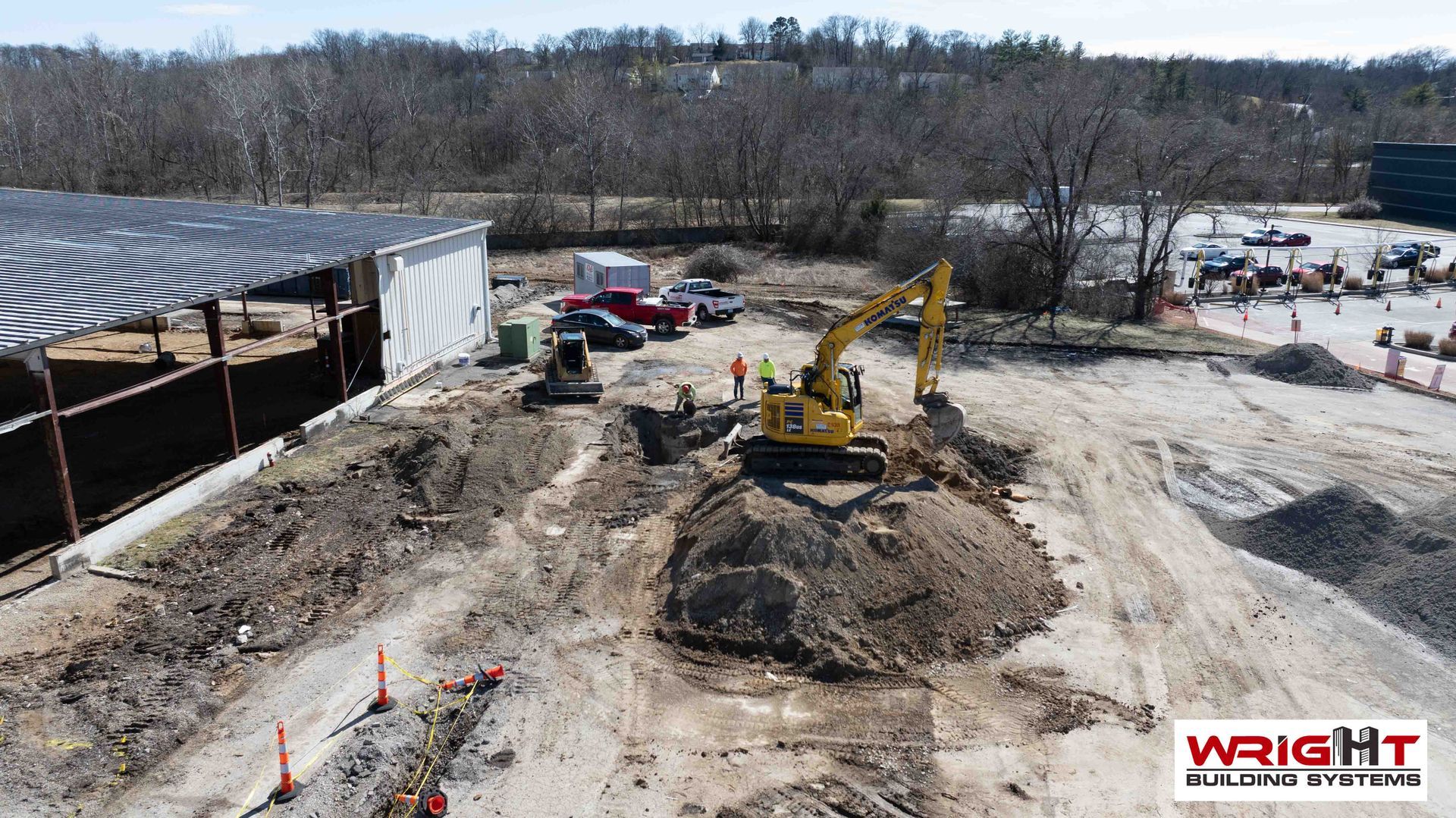
A Building That Grows With Your Business
A well‑designed building should support your business not just today, but years from now. Pre‑engineered metal buildings offer a practical, proven way to balance immediate needs with long‑term adaptability.
At Wright Building Systems, we help clients think beyond initial construction to create facilities that remain efficient, functional, and flexible as operations evolve.
The best building is not just one that fits your business today. It is one that still works when tomorrow looks different.
Contact us today to learn more.